
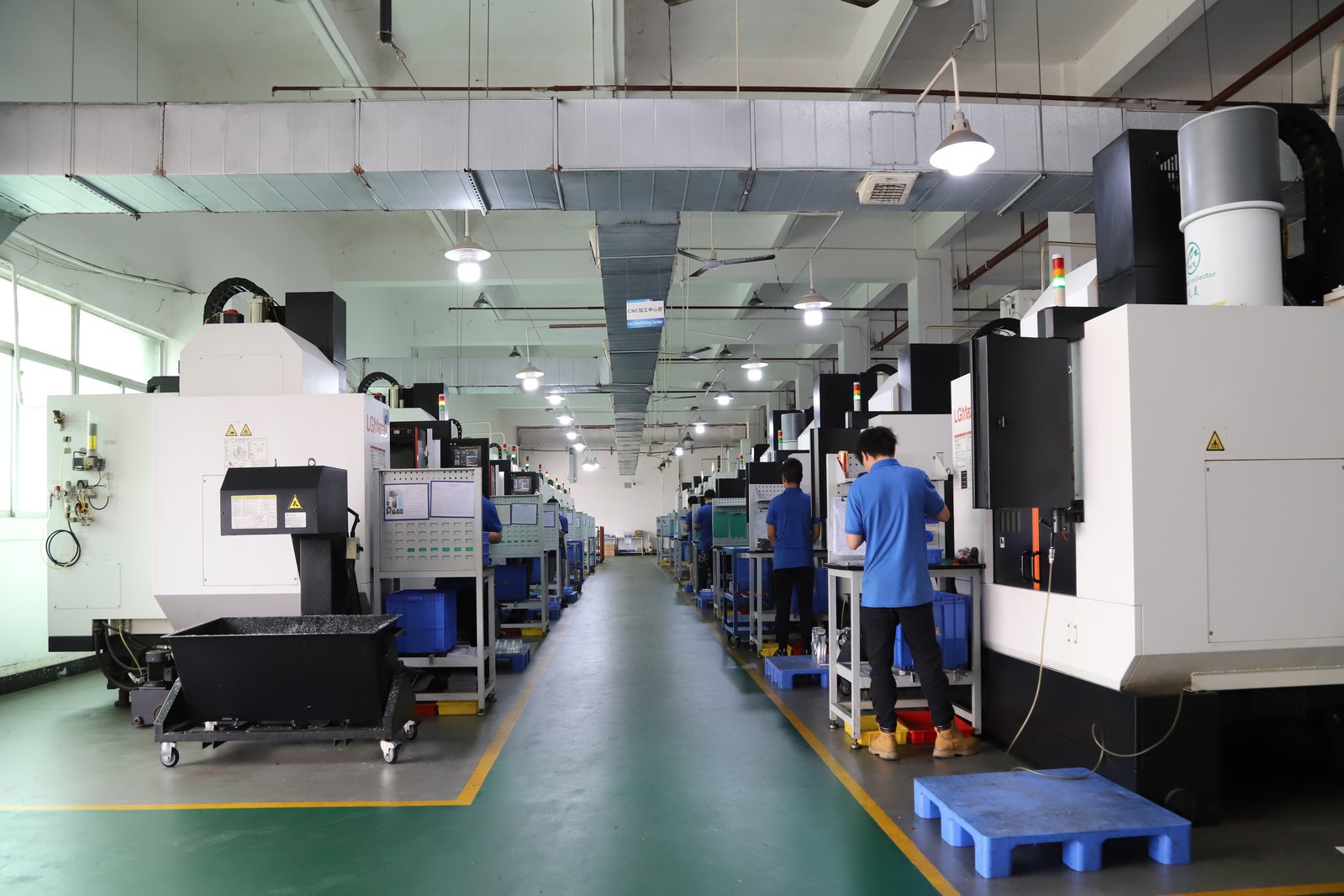
The aluminum versus stainless decision is usually the first material call a buyer makes, and it is often made on the wrong axis. Weight and cost point to aluminum; corrosion, stiffness, and temperature behavior point to stainless; and machinability, finishing, and tolerance response sit in between. Because the two machine differently, the choice also moves the price and the schedule before the first chip is cut. This guide compares aluminum and stainless across density, strength, corrosion, machining, and finishing, and gives you a decision table that matches the material to the environment your precision-machined part will live in.
- Density: aluminum about 2.7 g/cm³; stainless about 7.7-8.0 g/cm³ - roughly three times heavier.
- Stiffness: aluminum modulus around 69 GPa; stainless 190-210 GPa.
- Strength by grade: 7075-T6 exceeds annealed 304; 17-4 PH exceeds 7075.
- Corrosion: stainless resists bare; aluminum needs anodizing in service.
- Machining: aluminum cuts fast and is kind to tools; stainless work-hardens and costs more per part.
Why is material the first decision a precision machining buyer makes?
Material fixes more than the raw price; it fixes the cutting speed, the tool wear, the finishing route, and the certificate. Aluminum machines at high speed with light tool loads, so cycle times are short and quotes are low. Stainless cuts slower, wears tools harder, and needs more careful feeds, so the same geometry costs more in machining time before the alloy itself is priced.
The material also sets the tolerance behavior. Aluminum conducts heat away and cuts cleanly, which makes thin features and fine finishes easier to hold; stainless work-hardens and punishes interrupted cuts, so the drawing must be built for the process. A design that machines comfortably in 6061 can fight in 316L, and a precision shop should say so in the design-for-manufacturing review.
Choosing between the families is therefore choosing a whole manufacturing package rather than a metal. The decision belongs at the start of the RFQ, with the environment, the load, and the finish requirement in front of you - not after the first quote comes back higher than expected.
There is a scheduling angle as well. A drawing drafted for aluminum machines fast and quotes quickly; the same drawing switched to stainless changes cycle times, tool budgets, and often the finishing route. If the material decision moves late, the schedule moves with it, so the call belongs at the start of the project rather than after the first sample.
What does aluminum deliver on a precision-machined part?
Aluminum is the low-cost, fast-cycle workhorse of precision machining. Alloys such as 6061-T6 and 6082-T6 cut quickly, hold fine tolerances, and anodize to a hard protective finish. Where higher strength is needed, 7075-T6 approaches the yield strength of annealed stainless at a fraction of the weight, which makes it the standard choice for light structural parts.
That pairing of speed and strength is why so many quotes default to 6061 and only move to 7075 when the load demands it - and why the material note should name the grade rather than leaving the shop to guess which alloy the design allowables assume.
The limits are the ones every buyer learns once: aluminum loses strength above roughly 150 °C, is softer than steel in threaded joints, and corrodes when left bare in service. A precision part that must survive heat, repeated disassembly, or a corrosive environment will not be satisfied by aluminum unless the design carries an insert, a coating, or a documented temperature margin.
The cost argument is strong when the function allows it. Aluminum procures from stock, machines fast, and finishes cheaply, so the price difference against stainless on the same drawing is usually clear before the quote arrives. When the environment is benign, aluminum is the honest recommendation.
Anodizing adds a design layer to the aluminum decision. Hard-coat anodize grows the surface by tens of microns, which can consume a tight dimension when applied after final machining. If a precision dimension must survive anodize, the drawing should state whether the tolerance applies to the bare or the coated size - the detail that prevents a whole class of disputes.
What does stainless deliver that aluminum cannot?
Stainless brings corrosion resistance without a coating, higher temperature capability, and the stiffness and surface hardness that wear and threaded joints need. The grade does the real work: 303 is the free-machining option for general hardware, 304 is the all-round workhorse, 316L adds molybdenum for chlorides and marine service, and 17-4 PH delivers high strength through a precipitation-hardening step.
For a precision machined part the trade is machinability. Austenitic grades such as 304 and 316L work-harden and throw stringy chips, so they cut slower and cost more per part than 303 or than any aluminum. Specifying stainless where the drawing does not need its corrosion or temperature behavior pays a machining premium for a property the part never uses.
What stainless buys is honesty under service conditions: parts that get wet, hot, handled, or cycled behave like the material the analysis assumed. When the environment is the design driver, stainless is usually the answer despite the weight and the cost - and the precision part earns its price by lasting in service.
Precipitation-hardening stainless adds a process step to the schedule. 17-4 PH machines in the annealed condition, is hardened, and is often ground or finished afterwards, so the part moves through heat treatment and a second machining operation. The strength is real, and the lead time is part of the price.
How do density, stiffness, and strength compare in real numbers?
The numbers behind the decision are density, elastic modulus, and yield strength, and they point in different directions. Aluminum density is about 2.7 g/cm³ against 7.7-8.0 g/cm³ for stainless, so a stainless part weighs roughly three times its aluminum twin. For moving or handheld components that difference alone can settle the argument.
Stiffness favors steel: the elastic modulus is around 69 GPa for aluminum and 190-210 GPa for stainless, so a stainless part is roughly three times stiffer at the same geometry. Strength is a matter of grade, not family: 6061-T6 yields around 276 MPa, 7075-T6 around 503 MPa, annealed 304 near 215 MPa, and 17-4 PH in the H900 condition above 1,100 MPa.
| Property | Aluminum 6061-T6 / 7075-T6 | Stainless 303 / 304 / 17-4 PH |
|---|---|---|
| Density | About 2.7 g/cm³ | About 7.7-8.0 g/cm³ |
| Elastic modulus | About 69 GPa | About 190-210 GPa |
| Typical yield strength | 276 MPa (6061) to 503 MPa (7075) | 215 MPa (304) to over 1,100 MPa (17-4 PH H900) |
| Strength at 200 °C | Reduced substantially | Holds most of its room-temperature strength |
| Corrosion without coating | Poor - needs anodizing | Good to excellent by grade |
Read the table by function, not by headline. Low load and tight weight budget point to aluminum; threaded, cycled, or hot service points to stainless; and a light-but-strong requirement often lands on 7075 against 17-4 PH, with the corrosion environment making the final call.
Thermal expansion is the property buyers rarely price in. Aluminum expands at roughly 23 ppm per degree Celsius against 16-17 ppm for stainless, so a two-material assembly at temperature can bind or loosen in ways a single-material drawing never shows. If the part couples aluminum and stainless, include the pair together in the prototype.
How do corrosion and surface finish shape the choice?
Corrosion is the property buyers name most often and define most loosely. Bare aluminum corrodes in most atmospheres, so an aluminum service part normally carries an anodized finish - decorative, hard-coat, or dyed - and the drawing should say which. Stainless resists because the alloy forms a passive oxide film, restored after machining by passivation, which removes free iron left by tooling.
The grade choice follows the environment. Clean indoor service accepts 303 or 304; chlorides, salt, and marine exposure call for 316L; and parts that must not shed metal or gall favor the passivated stainless surface. If the drawing names the environment rather than just a grade, the shop can challenge a wrong choice before the material is ordered.
Dissimilar metal contact deserves its own line. Aluminum against stainless in a wet assembly sets up galvanic corrosion at the interface unless the aluminum is anodized or the joint is isolated. A precision part rarely flies alone, so note the mating metal on the drawing and let the material and finish be chosen together.
Fastener compatibility joins the same conversation. Stainless fasteners against aluminum structures are a standard pairing, but the threaded hole, the insert, and the finish must be selected together to avoid galling and galvanic issues. A drawing note that names the mating metal is the note that prevents the field failure.
How does machinability change the price and the tolerance story?
Machinability is where the families diverge most on the shop floor. Aluminum machines at high cutting speeds with predictable chips and gentle tool wear, which keeps quotes low and cycles short. Stainless work-hardens: a dwell or an interrupted cut hardens the surface, and the next pass fights it, so the shop cuts slower, replaces tools sooner, and charges accordingly.
The practical result is a cost and tolerance difference on identical geometry. The same drawing in 316L can take two to three times the machining time of the aluminum version, with more care around thin sections and fine threads. Tight features that are routine in 6061 need slower strategies in stainless, and the tolerance envelope itself stays the same - ±0.003 mm on milled and turned features and ±0.002 mm on precision-ground surfaces - while the effort to reach it grows.
The buyer consequence is that material choice happens before the tolerance discussion. If the function allows aluminum, the drawing can hold its features at lower cost. If the function demands stainless, relax the non-critical tolerances to give the process room, because every tight callout on a work-hardening alloy multiplies the difficulty.
Chip control also changes with the metal. Aluminum throws short, manageable chips that wash away cleanly; stainless throws stringy chips that can wrap tools and lodge in internal features. If the drawing has blind bores or internal passages, ask how the shop verifies chip removal - the material choice quietly decides how hard that job is.
When do temperature, wear, and cyclic load decide for you?
Environment overrides preference. Aluminum loses strength progressively above about 150 °C, so a precision part near an engine, a brake, or any sustained heat source belongs in steel unless the analysis proves otherwise. Stainless holds its properties far higher, which is why thermal and fire-risk designs start there and never seriously consider aluminum.
Wear and thread strength push the same way. Stainless surfaces are harder and handle repeated assembly, sliding contact, and abrasion better than bare or anodized aluminum. A threaded joint that is torqued and re-torqued, or a surface that slides against another component, will outlast in steel - and a precision thread in aluminum often needs an insert to survive.
Fatigue is the subtlest of the three. Aluminum has no fatigue limit in the way steel does, so cyclically loaded aluminum parts need honest allowables and often a thicker section. When the loading is genuinely cyclic and the environment is mild, stainless or a high-strength steel is frequently the safer engineering call despite the weight.
Fatigue testing on a sample can settle the argument. If the drawing will be cycled, a small batch machined in both candidate metals and tested to the expected load gives a measured answer where the chart only offers probabilities. The prototype order is where the material debate ends, because the test report replaces the opinion.
How do you turn the comparison into a decision?
- Name the environment first. Temperature, moisture, chemicals, and contact with other metals decide whether aluminum is even in play.
- Check the load and the weight budget. Light and lightly loaded points to aluminum; stiffness, threads, and cyclic load point to steel.
- Choose the grade, not just the family. 6061 versus 7075, 303 versus 304 versus 316L versus 17-4 - the grade does the real work.
- Set the finish with the material. Anodize for aluminum, passivation or electropolish for stainless, stated on the drawing.
- Let the quote show the difference. Ask a China precision machining shop to price the drawing in both families so the decision includes cost and lead time.
The table is a filter, not a verdict. When weight, corrosion, temperature, and machining cost all point the same way, choose with confidence. When they conflict, prototype in the candidate material and measure: the sample order is cheaper than the field failure, and the part will tell you what the chart cannot.
the part will tell you what the chart cannot. Two samples in the candidate metals will settle what the table leaves open.Frequently Asked Questions
Is aluminum always cheaper than stainless for a precision machined part?
Almost always on machining time, because aluminum cuts faster and is kinder to tooling. The comparison changes when the part needs stainless corrosion resistance, temperature capability, or strength - the cheapest material is the one that meets the environment.
Can aluminum replace stainless in a corrosive application?
Only with the right finish and the right grade choice. Anodized aluminum survives many atmospheres, but chlorides, salt, and aggressive chemicals still favor stainless such as 316L.
Which stainless grade is easiest to precision machine?
303 is the free-machining grade and the usual choice for general hardware. 304 and 316L machine acceptably but work-harden more; 316L earns its place for corrosion, not for machinability.
Does stainless weigh three times more than aluminum?
Roughly yes - aluminum density is about 2.7 g/cm³ against 7.7-8.0 g/cm³ for stainless. For moving parts the weight difference often dominates the material decision.
What tolerance can I hold in each material?
Both hold the same controlled envelope: ±0.003 mm on milled and turned features and ±0.002 mm on precision-ground surfaces, with Ppk ≥ 1.67 at the initial study on key characteristics and Cpk ≥ 1.33 on general characteristics. Capability is reported per characteristic: every report names the feature, its tolerance band, the sample size, the sigma method, and the study window. Stainless simply needs more care to reach it.
Do I need to anodize every aluminum part?
Not every part, but most parts in service. Anodizing protects the surface and carries color; a cosmetic or protected part may run bare. State on the drawing which applies so the finish is priced correctly.
Should I ask for a quote in both materials?
Yes, when the decision is close. A China precision machining supplier that machines both can price the same drawing in aluminum and stainless, and the gap between the quotes is the price of the stainless properties.
Not sure whether your part should be aluminum or stainless?
Send the drawing with the operating environment and ask for a material-and-machining review that prices both options. Contact the China Precision Machining team to compare.