
China Precision Machining Lead Times: What Drives Them and How to Plan
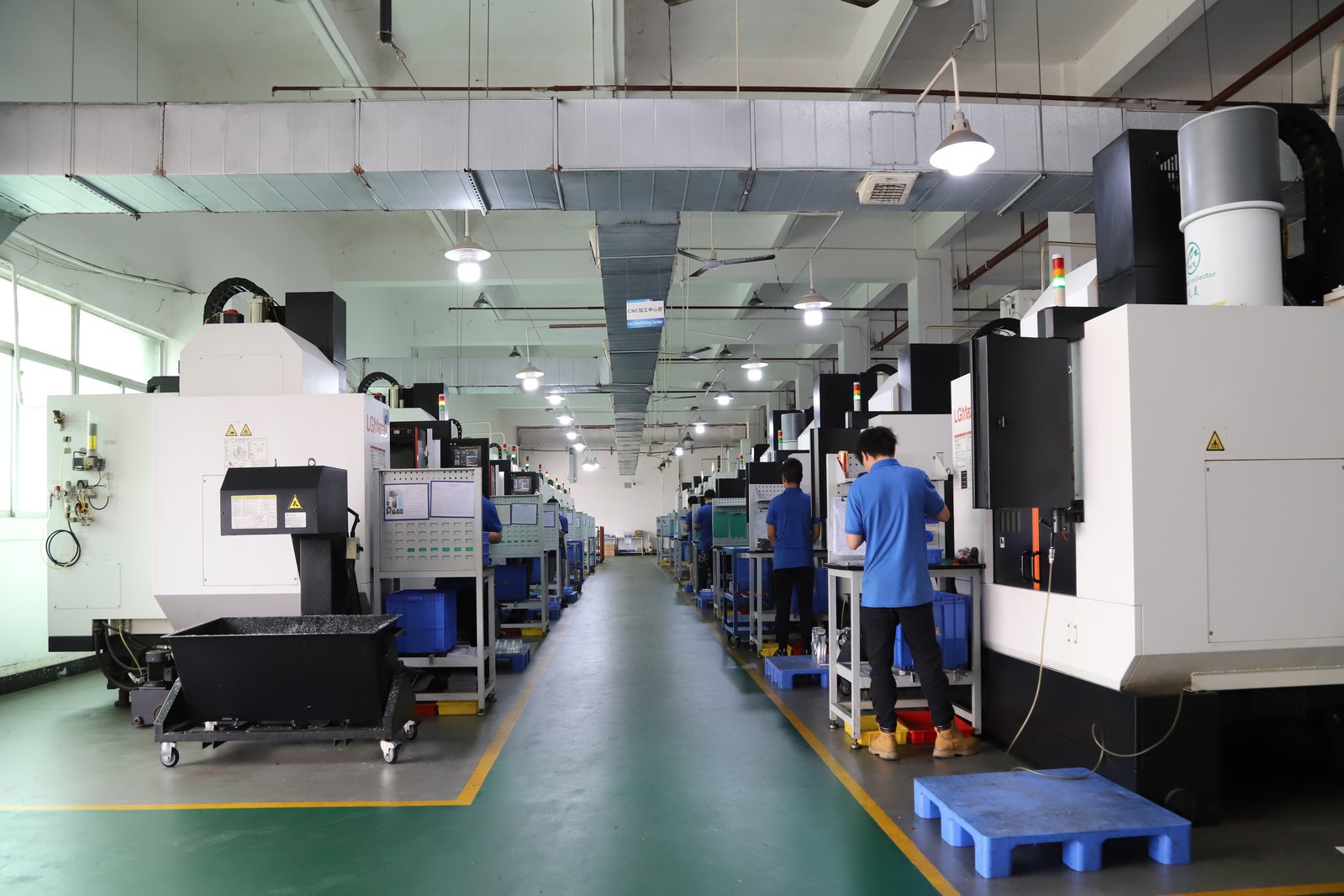
Every precision machining order is a promise between a supplier and a date, and the promises that hold are the ones built on an honest model of what the order actually takes. A lead time is not a single number that the supplier pulls from experience; it is the sum of concrete stages — material, setup, machining, inspection, finishing, and freight — each with its own duration and its own risk. This guide breaks a China precision machining lead time into those stages, shows the buyer what drives each one, and explains how to plan dates that survive contact with reality.
Why does a lead time have to be decomposed before it can be trusted?
A lead time quoted as a single number is a black box, and a black box cannot be checked, challenged, or planned against. When the supplier says "four weeks," the buyer has no way to know which weeks those are, what could stretch them, or what the supplier has actually committed to. The same four weeks, decomposed, becomes a map: material arrives in days, the order sits in the queue, the machining runs for a number of hours, the inspection takes its share, the finishing adds its step, and the freight leg has its own calendar. Each stage is checkable, and the sum is a lead time that can be managed instead of merely awaited.
Decomposition also exposes where the risk lives, which is where planning attention belongs. A part whose material is on the shelf has a different risk profile from one whose alloy must be ordered; a part with a one-week queue behind it is a different order from one that starts tomorrow; a part that needs anodizing at a subcontractor carries a scheduling dependency that no machining floor can control. The buyer who asks for the lead time stage by stage learns which stages are firm and which are soft, and plans the buffers accordingly instead of adding a blanket week to a number nobody understood.
How does material availability set the first part of the calendar?
Material is the first stage and the least negotiable, because machining cannot begin until the stock exists. Common grades — 6061 aluminum, 304 and 316 stainless, mild and alloy steels, brass — sit on the floor or at a local stockist, and the material stage is measured in days. Uncommon grades, imported alloys, certified material with full documentation, or material in an unusual size can push the stage to weeks, because the stock must be sourced, shipped, and verified before the first cut. The buyer who names the grade early lets the supplier check availability before quoting a date, instead of discovering a material delay after the order is placed.
Certification adds its own days to the material stage and is frequently underestimated. A part that must carry a material certificate with a heat or lot number cannot be cut from whatever bar is on the rack; the certified stock must be identified, purchased, and documented, and the certificate verified at receiving. When the material story is part of the specification — aerospace, medical, or regulated hardware — the buyer should state the certificate requirement in the RFQ so the supplier prices the sourcing time into the lead time rather than discovering it mid-order. The material stage of the calendar is where traceability lives, and traceability is never free of time.
What do setup and programming add to a precision order?
Before chips fly, the order needs a plan: the program that turns the model into toolpaths, the fixture that holds the part, the tooling that the operations require. For a new part, the programming and setup stage is real work measured in days — the engineer reviews the drawing, chooses the operations, writes and proves the program, and the first article is machined and measured before production can run. For a repeat part with an existing program and fixture, the stage collapses to hours. The difference between "new part" and "repeat part" is one of the largest single drivers of lead time, and it should be stated in every RFQ.
The setup stage is also where the buyer's own input changes the calendar. A drawing that arrives with a complete model, a clear datum scheme, and the key characteristics marked lets the programmer work in one pass; a drawing that arrives incomplete starts a question loop that burns days. A buyer who answers technical questions quickly keeps the order moving; one who is slow to respond adds days to a stage that the shop cannot control. The buyer's calendar and the supplier's calendar are the same calendar, and the parts of it that live in the buyer's inbox are as real as the parts that live on the shop floor.
How does the machine queue affect the promised date?
Every shop has a queue — the orders already booked ahead of yours — and the queue is where the difference between a shop's capability and its availability lives. A shop can be fully capable of your part and still quote a date that is weeks out, because the machines are committed to earlier orders. The queue is not a sign of a bad shop; in a good shop it is a sign of demand, and the honest queue is the foundation of an honest date. The buyer should ask where the order sits in the queue and what the queue looks like, because the answer explains the date better than any capacity claim.
The queue is also the stage where buyers negotiate speed, and the negotiation has real terms. A rush order moves ahead of the queue, which means other orders move back, and the shop prices that disruption into the expedite fee — fairly, because the disruption is real. A buyer who needs a part faster than the queue allows has three honest options: pay for the expedite, accept the queue, or find a shop with a shorter queue. The buyer who understands the queue stops treating lead time as a fixed property of the part and starts treating it as a function of the shop's current load, which is what it actually is.
What does the machining time itself depend on?
The machining stage is the part of the calendar that the part itself controls, and it scales with the operations the drawing demands. A simple turned or milled part with a handful of operations runs in minutes to hours; a complex part with many operations, tight tolerances that need multiple finishing passes, or features that cross to grinding runs far longer. The buyer who reads the drawing for its operation count can estimate this stage roughly before the quote arrives, and can compare the supplier's machining-time estimate against the part's complexity to judge whether the number is honest.
Material enters the machining-time calculation in the same stage. Free-machining aluminum and brass cut quickly; stainless work-hardens and wants lighter cuts; titanium and nickel alloys cut slowly and wear tooling. The same feature that takes minutes in 6061 takes much longer in Inconel, and the material that the drawing names determines the machining stage more than almost any other single factor. A buyer comparing lead times across materials should expect the harder alloys to carry longer machining stages, and should read a short quote on a difficult material as either a sign of efficiency or a warning that the estimate is optimistic.
How much of the calendar belongs to inspection and first-article approval?
Inspection is the stage that precision machining adds over ordinary machining, and it is a real part of the calendar. A first article — every characteristic measured against the drawing before production runs — takes its own time, and the approval that follows it is a gate in the schedule. If the first article is approved by the buyer in writing, production proceeds; if the approval waits on the buyer's review, the order waits with it. The buyer who plans the first-article review into their own calendar, and answers the approval promptly, keeps the production stage from sliding.
Batch inspection adds its own share for production orders, especially when the drawing marks key characteristics. Sampling across the run, CMM time on the critical features, and the reports that document the results all take hours that belong in the lead time. A buyer who asks for capability evidence on key characteristics is asking for a stage that has a duration, and the supplier should quote it as such. The inspection stage is the price of the documentation that precision machining is bought for, and buyers who value the documentation should expect the stage to be in the calendar rather than surprised by it.
What do finishing and secondary operations add to the schedule?
Machining is often not the last step, and every step after it adds its own days. Deburring may be built into the machining or run as a separate pass; anodizing, passivation, plating, and heat treatment go to dedicated suppliers with their own queues and their own transport legs; grinding and polishing add their own processes. A part whose drawing names a coating or a treatment has a second supply chain embedded in its lead time, and the buyer should ask which operations are in-house and which are subcontracted, because the subcontractor's queue is outside the machining shop's control.
The finishing stage is where the most optimistic lead times collapse, because it is the least visible from the buyer's side. A shop can machine in days and then lose a week waiting for an anodizing batch to fill, or for the heat treater's furnace cycle, and the buyer who was promised the machining time feels the slip without understanding its cause. The fix is decomposition again: the quotation should state the finishing operations and their durations separately, so the buyer knows that the anodize is a week of the total and plans for it. Finishing is not an add-on to the lead time; it is part of the lead time, and it deserves to be named.
How should freight and customs be folded into the promised date?
For an international buyer, the last stage of the lead time is the one that moves the parts across the world, and it is as real as any machining hour. Air freight moves parts in days but costs by weight and volume; sea freight costs less and takes weeks, with the port, the customs clearance, and the inland leg each adding their own variability. The incoterm decides which side owns each leg and its risk, and the promised date should state which point it refers to — the parts leaving the factory, the parts on the plane, or the parts at the buyer's dock. A date without a defined point is a date that will be argued about.
Buyers planning China precision machining should build the freight stage with its buffers, because international logistics rewards pessimism. Customs documentation errors, port congestion, and the weather that grounds freight are all real events that occur at a rate the optimistic calendar never anticipates. The buyer who schedules the first production use of the parts with a margin after the quoted delivery point is a buyer whose assembly line does not wait on a container. The buffer is not a cost; it is the difference between a lead time that is planned and a lead time that is hoped for.
How do you turn the decomposed lead time into a date that holds?
With the stages named, the promised date becomes a schedule rather than a number, and the schedule should be written into the order. The PO should state the material availability date, the first-article date, the production completion date, the finishing completion date, and the delivery point with its incoterm — each one checkable as the order progresses. The buyer who holds the supplier to the schedule gets early warning of slips at the stage where they occur, and early warning is the only kind that allows a recovery plan. A schedule that names its milestones is a schedule that can be managed.
The final discipline is the buyer's own contribution to the calendar. Answer technical questions promptly, approve the first article on time, confirm the drawing revision before the order starts, and make the documentation requirements known before the quote rather than after. A supplier's lead time is built on the assumption that the buyer is responsive, and a buyer who is slow adds days to the schedule as surely as a slow material supplier does. When both sides treat the schedule as a shared calendar — every stage named, every milestone checkable, every delay visible — the promised date becomes a date that holds, and the precision machining relationship earns the next order.
Frequently Asked Questions
Why do quoted lead times vary so much between suppliers for the same part?
Because the stages vary, not the part. Material availability, machine queue, inspection depth, finishing operations, and freight all differ between shops and between weeks. Ask for the decomposed schedule — material, queue, machining, inspection, finishing, freight — and the differences become explainable.
What is the fastest way to compress a machining lead time?
Answer the stages you control: send a complete model and drawing, respond to technical questions promptly, approve the first article quickly, and state the documentation requirements up front. On the supplier side, ask where the order sits in the queue and whether expediting is available.
How much does material availability affect the date?
More than most buyers expect. Common grades are measured in days, while uncommon or certified material can take weeks to source, ship, and verify. Name the grade and the certificate requirement in the RFQ so the supplier checks availability before quoting.
Should a first article be approved before production runs?
Yes, on a new part. The first-article inspection and approval is a gate in the schedule: production waits on it, and the buyer who approves promptly keeps the production stage from sliding. Plan your own review time into the calendar.
How should I plan for finishing operations like anodizing?
Ask which operations are in-house and which are subcontracted, and get the finishing durations stated separately in the quotation. Subcontracted finishing has its own queue and transport legs that the machining shop cannot control.
Which delivery point should the quoted lead time refer to?
State it explicitly — factory, port, or your dock — with the incoterm that defines each leg. A date without a defined delivery point is a date that will be argued about, and the freight stage deserves its own buffer in your schedule.
Planning a precision machining order from China and want a schedule built stage by stage, with the date decomposed instead of asserted?
Send the drawing and the target date to [email protected] or call +86 13126536955 and receive the decomposed schedule with every stage named. The services page, the quality page, and the FAQ page on this site describe the planning routine in detail.