
China Precision Machining vs. the Alternatives: Which Material–Process Pair Wins Your Part?
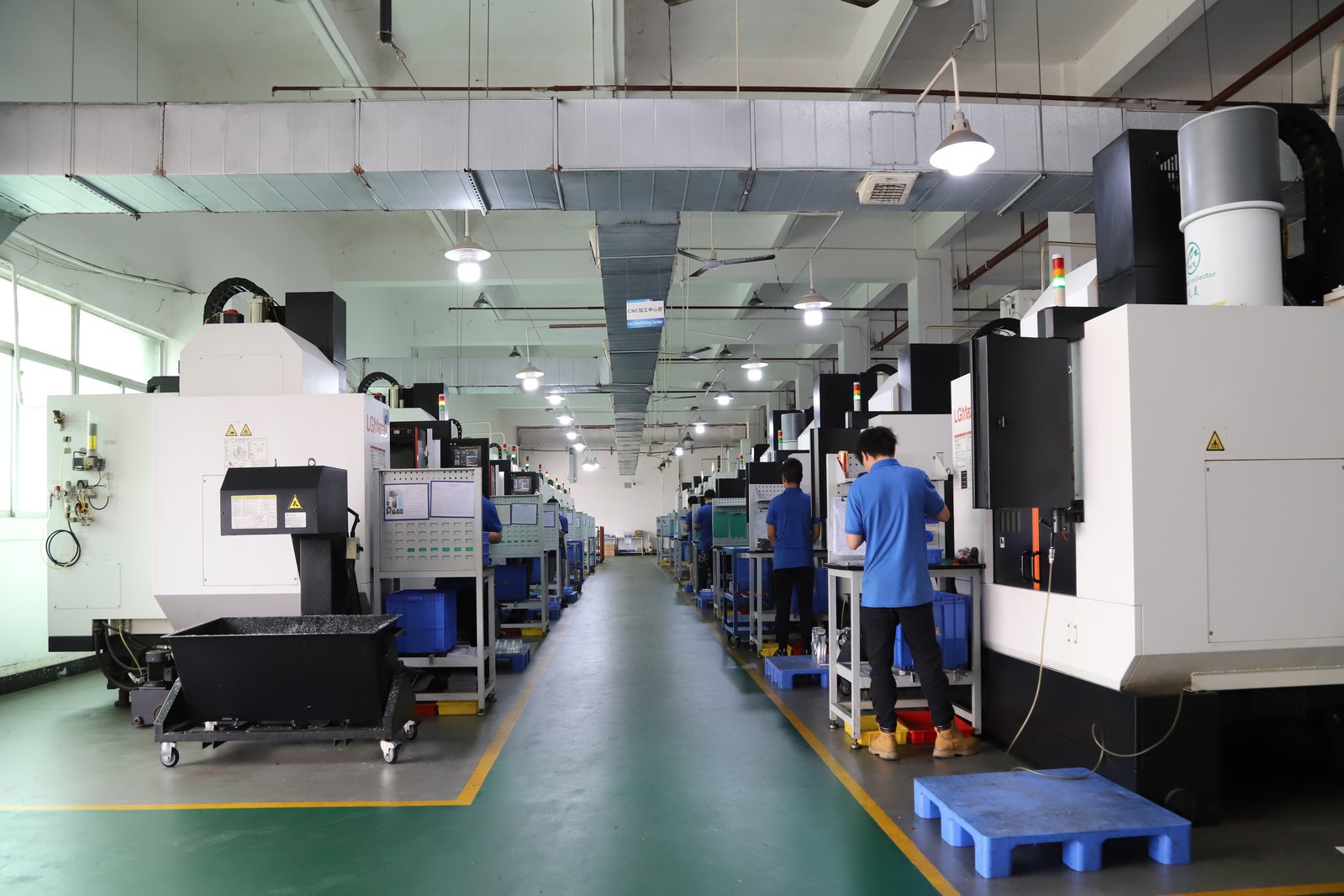
Every machined part sits at the intersection of a material and a process, and neither can be chosen honestly without the other. A complex housing can be precision machined from billet in China, cast near-net and finish-machined, forged and finished, or printed and then machined on its critical faces, and each route changes the material that makes sense, the tolerance you can promise, and the quantity at which the economics turn. Sourcing from China adds one more dimension to the decision: the verification chain has to travel as far as the parts. This guide compares the realistic routes from the buyer's side and shows what each route has to prove before you commit a drawing.
Why is the material–process pair the real decision when you source from China?
Choose a process without fixing the material and the quote comes back built on a material assumption you never approved. A 6061-T6 bracket and a 7075-T6 bracket are the same process with a different price and a different fatigue story; a cast aluminum housing and a machined one are different materials entirely, because the alloy that fills a mold well is not the alloy that machines best. When the supplier is in China, the ambiguity is harder to correct — an offshore shop working from an unclear drawing is not a short phone call away — so the drawing has to name the grade, the condition, and the tolerance before any route comparison makes sense.
The reason to name the pair explicitly is verification, and verification is where offshore sourcing succeeds or fails. Every claim on the drawing must be checked against evidence, and the evidence chain differs by route. Billet machining starts from a mill certificate and keeps the wrought structure. A casting needs its foundry records and porosity inspection. A forging needs die and heat-treat records. A printed part needs powder lot and build data. When you compare China against local suppliers, or machining against near-net routes, you are comparing verification chains as much as prices, and across an ocean, the verification chain is the part you are really buying.
When does sourcing precision machining from China genuinely beat a local shop?
The honest comparison starts with the same drawing at the same quantity, because machining cost has two halves — the hours and the overhead. For stable, well-documented parts at mid volume, a precision machining shop in China prices the machine hours below a high-cost-country floor, and the material, tooling, and tolerance capability are the same either way. The part number is identical; what changes is the landed cost. When the drawing is frozen, the quantity justifies the freight, and the documentation is specified in the RFQ, sourcing from China wins on total cost. That is the classic case, and it is real for hundreds of thousands of part numbers a year.
The boundaries are equally real. China sourcing stops winning when the part needs iteration, when the schedule cannot absorb transit time and customs clearance, or when the part is so light that freight dominates the comparison. A prototype that will change three times is cheaper with a local shop that turns a revision around in days; the offshore loop — revise, transmit, machine, inspect, ship — costs weeks per cycle. And a shop in China is not automatically the low-cost option for every part: precision machining there spans a wide range of capability and pricing, and the buyer's job is to find the shop whose machine floor and inspection practice match the part, not the shop with the lowest number on a marketplace listing. The services page on this site describes the RFQ and quoting process for the offshore half of that rule.
When does casting plus finish machining beat precision machining from billet?
Casting wins on two conditions that must hold together: the quantity is high enough to amortize the tooling, and the near-net shape actually saves enough machining to matter. A die-cast aluminum housing at tens of thousands of parts, with its sealing faces and bearing bores finish-machined, is cheaper per part than the same housing cut entirely from billet — the casting delivers the bulk shape in seconds and the machine only touches the features that need precision. For very large parts, sand casting pushes the crossover up in quantity but the logic is the same.
The trade-offs are material and verification. Cast alloys are chosen for fill and solidification, not machinability, so the finishing cuts behave differently and internal porosity can surface on a machined face. Every casting needs its foundry records and, for pressure or fatigue applications, a porosity inspection standard. And the machining is not optional — castings are rarely accurate enough on critical features, so the finish-machining step is where the real tolerance is made, and that step needs the same inspection evidence whether it happens beside the foundry or across an ocean. The honest comparison is total cost at your quantity: tooling plus per-part cast-and-finished price against machining the whole part from billet.
When does forging plus finish machining justify its cost?
Forging exists where the material's internal structure has to do work: grain flow follows the part shape, which buys fatigue life and impact strength that machining from billet cannot match because billet grain runs one way. Highly loaded structural parts, suspension and landing hardware, and components in safety-critical systems are the classic candidates. If the design is driven by fatigue rather than by geometry alone, a forged blank is not an indulgence — it is the material property the part is specified around.
The economics are steeper than casting because forging dies are expensive and the material is often harder to machine after forging, particularly when delivered heat-treated. The crossover quantity is high, and the machining story is the same as casting: the forge delivers the shape and the grain, but the tolerance lives in the finish-machining, which is where a precision machining shop in China typically enters the chain. When forging is combined with offshore finishing, the buyer should separate the blank cost from the machining cost in the quote — the split is where you see whether the route is earning its keep, and where the verification responsibility lands for each half of the chain.
When does metal 3D printing beat machining, and what still has to be cut?
Metal 3D printing wins at the opposite end of the volume scale: one-to-a-few parts whose geometry machining cannot reach. Internal cooling channels, organic lattices, topology-optimized shapes, and assemblies consolidated into a single printed body are the honest uses — the geometry justifies the process regardless of quantity, because no cutter can produce the internal shape at all. For those parts, printing is not an alternative to precision machining; it is the route that makes the geometry at all.
What printing does not remove is machining. A printed part is a different material from wrought metal of the same alloy name — powder-bed properties, anisotropy, surface roughness, and looser as-built tolerances are the rule — so critical bores, sealing faces, datum surfaces, and threads still go to a cutter after printing, and the printed body needs its powder lot and build parameters documented for the material claims to hold. When the printed part's critical features are machined and inspected, that finishing step produces exactly the dimensional evidence this site's quality practice is built around; the quality page shows what that evidence looks like when it is produced as a matter of routine.
Which material–process pair fits your part? A decision table
Read the table against your own part and let the majority of the answers point. The columns cover the routes most often compared when a buyer weighs precision machining in China against the alternatives:
| Dimension | CNC precision machining | Local machining | Casting + finishing | Forging + finishing | Metal 3D printing |
|---|---|---|---|---|---|
| Best part | Stable, documented, precise features | Iterative, urgent, low volume | Complex shape, high volume | Fatigue-critical, loaded parts | Internal geometry, 1–10 pcs |
| Tolerance | ±0.003 mm milling/turning, ±0.002 mm grinding, Ppk ≥ 1.67 initial | Same band | Net-shape; precision machined | Net-shape; precision machined | Loose as-built; critical faces machined |
| Material freedom | Broad, wrought structure | Broad, wrought structure | Castable alloys only | Forgeable alloys only | Print-capable powders |
| Tooling | None | None | Dies — amortize at volume | Dies — amortize at volume | None, high per-part cost |
| Verification chain | Documents travel; require them in RFQ | Easy to audit in person | Foundry + porosity + machining evidence | Die, heat-treat + machining evidence | Powder + build + machining evidence |
| Lead-time profile | Machining + transit + customs | Shortest local loop | Tooling lead + volume | Tooling lead + volume | Print time, no tooling |
The route that survives the columns that matter for your part — drawing stability, quantity, tolerance, verification — is the honest answer, and when the answer is a hybrid, the RFQ should ask for the full chain: the net-shape body, the machined critical features, and the evidence for both halves.
How do you verify the winning route when the supplier is in China?
The verification discipline for an offshore supplier starts in the RFQ, not at the dock. Name the documents each route must produce: a mill certificate with the heat number for machined bar, foundry and porosity records for a casting, die and heat-treat records for a forging, powder and build records for a printed part, and, for every route, a dimensional report on the machined critical features, mapped to the drawing datums and measured on a CMM. Put that list in the RFQ and it becomes part of the price; leave it out and it becomes a negotiation after the parts ship.
Two offshore-specific checks make the verification real. First, ask to see a redacted sample of each report type before you order — the format tells you whether the supplier produces the evidence routinely or assembles it on request. Second, check the certificates with the registrar rather than accepting logos: a supplier holding ISO 9001:2015, IATF 16949:2016 (product design excluded) and ISO 14001:2015 with verifiable certificate numbers is running a managed operation, and the scope line tells you what the system actually covers. The parts page on this site shows the range of geometry a precision machining shop in China is typically asked to make, and the FAQ page answers the diligence and documentation questions that come up when the supplier is offshore.
What should you send so the process decision is made on evidence?
A route comparison is only as good as the drawing it is based on. Send the same STEP or IGES model and the same 2D PDF to the routes you want to compare, with the material grade and condition fixed, the critical features marked, and the quantity stated — then ask each supplier to name the process it would run and the documents the parts would ship with. When one of the candidates is offshore, add the commercial terms — incoterm, freight method, payment — so the quotes are comparing manufacturing, not shipping arithmetic. A supplier that quietly re-specifies your material to suit its own process without telling you is not comparing routes; it is selling its machine.
Where the evidence discipline bites hardest is the finish-machining step that every near-net route shares. Whether the body is cast, forged, or printed, the precision lives in the machined features, and those features are verified exactly the way they are on a fully machined part: dimensional reports against the drawing datums, material certificates, and capability data where the tolerance is tight. When the comparison comes back, weight the verification chain as heavily as the price. For the sourcing and quoting overview, the factory page on this site describes the operation behind the quotes, and the contact page puts you in front of the engineer who reads the drawings.
Frequently Asked Questions
When does precision machining in China beat a local machine shop?
When the drawing is stable, the part is documented, and the quantity justifies the freight and lead time — the offshore machine-hour saving then lands as real landed-cost reduction. Local machining wins when the part needs iteration, the schedule cannot absorb transit time, or freight dominates the comparison.
Is a cast or forged part still machined after the near-net step?
Yes, on every feature that carries precision. Castings and forgings deliver near-net shape and, in the forging's case, favorable grain flow, but their as-formed tolerances are too loose for bores, sealing faces, datums, and threads. Those features are finish-machined and verified with the same dimensional evidence as a fully machined part.
Does material choice change the China-versus-local decision?
Yes, through the verification burden. The offshore advantage is largest on standard, easy-to-verify materials dominated by machining hours — aluminum, 304 and 316L stainless, brass, and free-machining steel. It narrows on titanium and nickel alloys, not because China cannot machine them, but because the material certificates and incoming verification matter more and travel worse.
When does metal 3D printing make sense instead of machining?
When the geometry cannot be machined at all — internal channels, lattices, or consolidated assemblies at very low volume. Printed parts carry anisotropy, surface roughness, and looser as-built tolerances, so critical features are machined afterward and the material claims need powder and build records.
What is total landed cost, and why compare it instead of the unit price?
Total landed cost is the unit price plus freight, customs and duties, payment costs, and the cost of your own inspection and quality time on a remote supplier. A quote comparison that stops at the part price is incomplete, because two suppliers can quote the same part price and land it at very different total costs.
How does the verification chain change when a part is made offshore?
It has to be specified up front instead of inspected on arrival. The material certificate, the dimensional report against the drawing datums, the capability data, and the revision letter should all be named in the RFQ so they arrive with the parts. Across an ocean, documents that were optional for a local supplier become the audit you run from your desk.
What documentation should an alternative-process part ship with?
The evidence for the route it actually took. A fully machined part ships with a mill certificate and a dimensional report. A cast part adds foundry and porosity records; a forging adds die and heat-treat records; a printed part adds powder lot and build parameters. Every route still needs dimensional evidence for its machined critical features.
Weighing precision machining in China against a near-net route or a local shop, and want the process and verification comparison for your part?
Send the drawing and the quantity. You will get back the route comparison for your geometry, the tolerance each option can hold, and the verification documents buyers should expect from the route that wins. Email [email protected] or call +86 13126536955.