
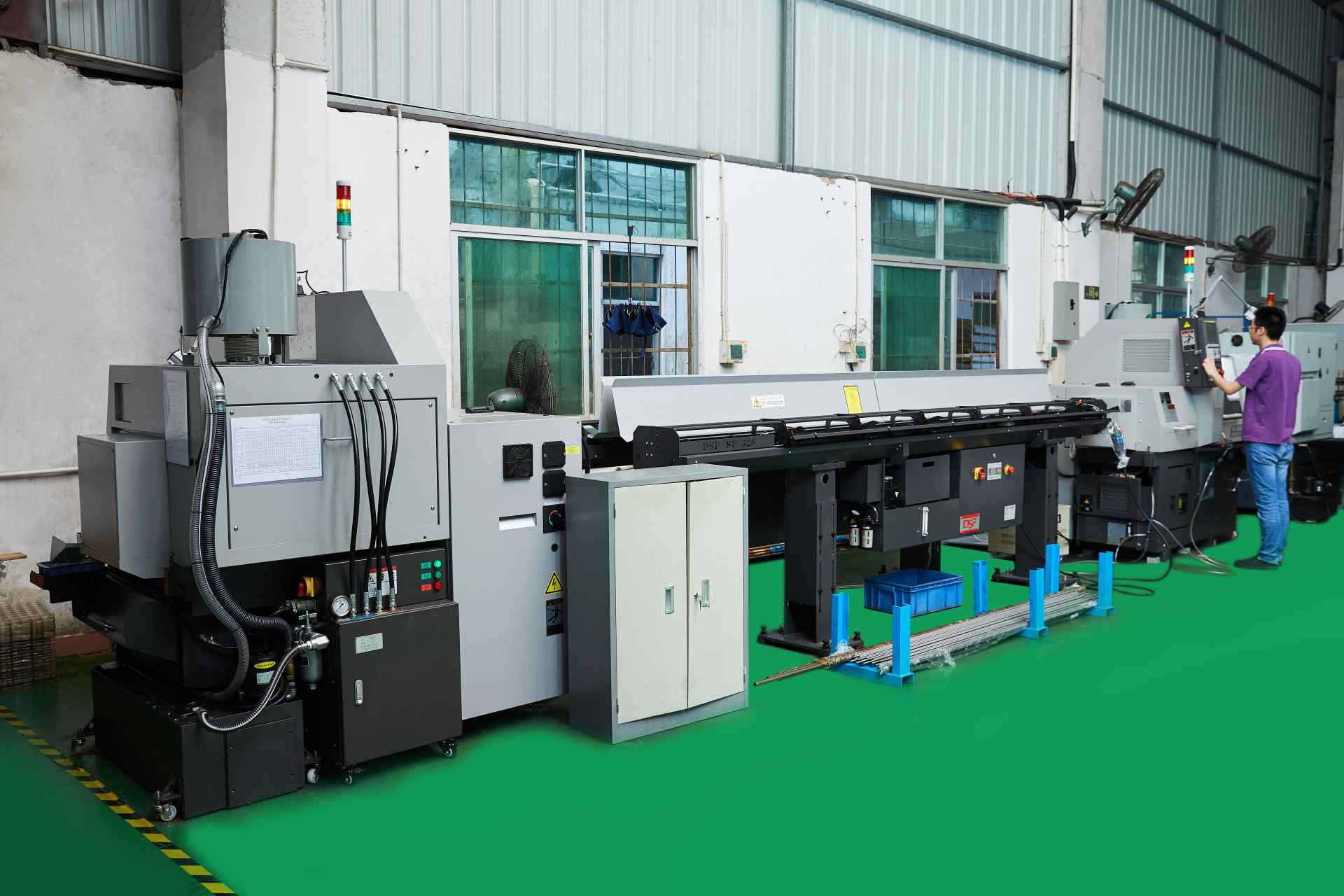
What Is Defense Industry CNC Precision Machining (and Why It Matters for China Precision Machining)
Standard CNC work holds features to about ±0.003 mm (0.00012 in) on a capable 3- or 5-axis center, with ±0.002 mm achievable on critical features via grinding or wire EDM. General dimensions usually default to ISO 2768-f (fine) or m (medium) unless you call out tighter. Surface finish from cutting runs Ra 0.8–3.2 µm; fine finishing and grinding reach Ra 0.4 µm or better.
For production, ask for a process capability target: Cpk ≥ 1.33 in production on general characteristics and on key/safety characteristics, with Ppk ≥ 1.67 at the initial study. A supplier who cannot state a Cpk number is telling you they are not running a controlled process.
| Characteristic | Typical capability | What it costs you |
|---|---|---|
| Standard mill / turn features | ±0.003 mm | Baseline; little premium at volume |
| Critical features (grind / wire EDM) | ±0.002 mm | Extra operation + inspection |
| General dimensions (default) | ISO 2768-f / m | Free — leave unspecified unless functional |
| As-machined surface | Ra 0.8–3.2 µm | Fine for most mates |
| Finished / ground | Ra 0.4 µm or better | Needed for seals / slides |
The single most expensive habit in CNC sourcing is tightening tolerances by default. Every call-out you do not need is an inspection step and a scrap risk the shop must price in. Tighten only the surfaces that mate, seal or bear load, and leave the rest at ISO 2768.
How Defense Industry CNC Precision Machining Works in Practice
Design for manufacturability is where part cost is won or lost. The principles are boring and non-negotiable:
- Internal corners cannot be sharp — an end mill leaves a radius. Call out a fillet (≥ 0.5 mm) instead of a square corner.
- Hole depth should stay near or below 4× the diameter for twist drilling; deeper holes need gun drills and longer lead times.
- Walls thinner than ~0.5–1.0 mm chatter and distort. Thicker is cheaper and more stable.
- Standard threads under ~M2 / #2 are fragile in soft metals — avoid unless the assembly demands them.
- Tight tolerances cost money on every feature. Tighten only the surfaces that mate or seal; leave the rest at ISO 2768.
- Heat-treated parts move. If flatness matters post-hardening, plan a finish-grind operation and say so in the RFQ.
Good DFM is not about dumbing the design down — it is about spending tolerance and features only where the product actually needs them.
Materials & Process Options
Material is the first cost and capability decision on defense industry cnc precision machining, and the one buyers most often under-spec. The table below is the short version of what a shop weighs before quoting:
| Material | Density | Yield (typ.) | Machinability | Buyer note |
|---|---|---|---|---|
| Aluminum | 2.7 g/cm³ | ~276 MPa | 85/100 | 6061-T6: the default light structural alloy; 7075-T6 nearly doubles yield for aerospace/robotics at a corrosion & cost premium. |
| Stainless | 8.0 g/cm³ | ~215 MPa | 35/100 | 304 machines with sharp, rigid setups; 316L adds moly for marine/salt; 17-4 PH reaches ~1000 MPa but moves in heat treat. |
| Titanium | 4.43 g/cm³ | ~880 MPa | 20/100 | Ti-6Al-4V: ~60% steel density at comparable strength; low conductivity traps heat — rigidity + coolant + coated tools win. |
| Brass | 8.5 g/cm³ | ~205 MPa | 100/100 | C360 free-machining benchmark; superb finish for fittings/connectors. Watch EU lead-content (RoHS/REACH). |
| Copper | 8.96 g/cm³ | ~70 MPa | 45/100 | C110 conducts but is gummy/BUE-prone; sharp positive-rake tools, lower speed. Use only when conductivity matters. |
| Inconel | 8.19 g/cm³ | ~1035 MPa | 8/100 | 718: strength-at-temperature + severe work-hardening; budget slower cycles & premium tooling — a capability signal. |
| Peek | 1.32 g/cm³ | ~100 MPa | 50/100 | Continuous ~143 °C, inert; machines like a hard plastic — sharp tools, controlled heat, no coolant cross-contamination. |
| Delrin | 1.41 g/cm³ | ~69 MPa | 90/100 | POM: stable, low-friction, holds tight tol; can warp from internal stress — gentle clamp, let stabilize before final pass. |
A few consequences that show up in your quote:
- Aluminum 6061-T6 is the default for a reason: cheap, stable, fast to cut, and ample at ±0.01 mm. Reach for 7075-T6 only when strength drives the design.
- Stainless costs more to machine (it work-hardens) and demands rigid fixturing, but 316L is non-negotiable near salt or bodily fluids.
- Titanium and Inconel are where quotes diverge most. The number is not the machine; it is tool life, coolant strategy and cycle time. A shop that quotes them cheap is probably not holding your tolerance.
- PEEK / Delrin are polymers with real engineering value (chemical, thermal, friction), not cost-cutting substitutes for metal.
Buyer takeaway: name the grade and temper in the RFQ ("6061-T6", "316L", "Ti-6Al-4V Grade 5"). "Aluminum" or "steel" is not a spec — it hands the shop a guess, and you pay for the ambiguity in scrap and rework.
Specifying Defense Industry CNC Precision Machining: Tolerances, Finishes, RFQ Checklist
Before you send the RFQ, run this five-point check:
- Is every tight tolerance tied to a function, or habit?
- Did you name the exact material grade and any cert?
- Are internal corners filleted (no square corners from end mills)?
- Is hole depth within ~4× diameter, or do you need a specialty drill?
- Do you need FAI/PPAP, and did you say so?
A 10-minute checklist pass typically removes the ambiguities that cause 80% of sourcing delays.
Common Mistakes China Precision Machining Buyers Make
Defense industry cnc precision machining shows up wherever a part must be both precise and produced in quantity: robotics and automation frames, semiconductor and medical fixtures, e-bike and drivetrain components, aerospace brackets, and consumer-electronics housings. The common thread is a tolerance or a material that punishes a sloppy process.
For each of these, the buyer's job is the same: define the function (what must align, seal or bear load), then let the shop propose the cheapest process that meets it. Over-specifying is the quiet budget killer.
How Zhuohang Precision Machining Factory Approaches Defense Industry CNC Precision Machining
Here is the straight version on defense industry cnc precision machining. Zhuohang Precision Machining Factory runs 100+ CNC machines across 6,800 m² plant in Hengli, Dongguan, backed by ISO 9001:2015 · IATF 16949:2016 (product design excluded) · ISO 14001:2015. For a part like yours, the first move is not a quote — it is a five-minute engineering read of the drawing to flag anything that will cost you later: a tolerance tighter than the function needs, a thin wall that will chatter, a corner an end mill cannot cut. You hear about it before metal moves, not at rejection.
If a 3-axis center holds your true tolerances, that is what we recommend, not the pricier option. The credible supplier is the one willing to talk you down a process when your part allows it. Send the drawing to Felipe Iglesias at [email protected] and you will get an answer you can act on, not a sales script.
How to decide: a practical framework for defense industry cnc precision machining
When the spec sheet is ambiguous, fall back to this four-step loop. It is how a disciplined shop quotes, and how you should evaluate the quote:
- Function first. List what the part must do — align, seal, bear load, dissipate heat. Every tolerance ties to one of these or it is optional.
- Pick the simplest process that holds true tolerance. 3-axis before 4-axis before 5-axis; turn before mill-turn; machining before EDM. Each step up is a cost you must justify on the drawing.
- Name the material by grade, not family. '6061-T6' not 'aluminum'; '316L' not 'stainless'. The grade sets machinability, certs and price.
- Demand evidence of control. Cpk targets, FAI reports, mill certs. If the shop cannot produce them, the low price is borrowing against your shipment.
Run this loop before you ask for a quote and you will write a better RFQ, get a tighter number, and bore the right supplier.
An illustrative scenario
To make the trade-offs concrete, consider a representative part — a 200 × 150 × 20 mm aluminum bracket with six M5 bosses on one face and two precision slots on an adjacent face, called out at ±0.05 mm. The thinking is generic and mechanism-based; it is not a specific customer job:
- A 3-axis center machines the top face and bosses in one setup. The two slots on the side need a second setup — acceptable at ±0.05 mm, because the re-clamp error stays well inside the tolerance budget.
- If those slots were called out at ±0.005 mm, the re-clamp alone would risk the number. That is the moment a 4- or 5-axis single-setup cut earns its premium, not because the machine is 'better', but because it removes the error source.
- Material is 6061-T6, so no special tooling or coolant strategy is needed; cycle time is dominated by the pocket milling, not the drilling.
The lesson: tolerance drives process choice, not the other way round. Write the loosest tolerance that still functions and you usually get the cheapest capable process for free.
A ready-to-send RFQ snippet for defense industry cnc precision machining
Copy this into your inquiry and fill the brackets. A complete RFQ is the difference between a real quote in 24 hours and a guess in a week:
Subject: RFQ — defense industry cnc precision machining

1. Part: [name]  |  Qty: [prototype / N pcs]
2. Model: [STEP/IGES attached]  +  2D drawing with dims & tolerances
3. Material: [grade+temper, e.g. 6061-T6]  |  Certs: [EN 10204 3.1 / RoHS / none]
4. Critical tol: [3 tightest, e.g. ±0.005 mm slots]  |  GD&T: [list]
5. Finish: [Ra, anodize/plating, faces]
6. Target date: [ ]  |  FAI/PPAP: [required / not]

Send to Felipe Iglesias — [email protected]
Suppliers quote the drawing, not the keyword. The more precise the brief, the less the shop charges to de-risk it.
Frequently Asked Questions
What does defense industry cnc precision machining mean in practice?
It is producing a physical part to a digital model on computer-controlled machine tools, where the real value is repeatable accuracy — the same part, same dimensions, lot after lot. The buyer's question is which configuration reaches the features in the fewest setups.
What tolerance can I realistically expect?
About ±0.003 mm (mill/turn) on standard features, with ±0.002 mm (grind / wire EDM on critical features). General dimensions default to ISO 2768 unless tighter is called out. Tighten only what functions — every tight call-out is a cost.
Which material should I choose?
Driven by the application: aluminum 6061-T6 for general lightweight structure, 7075-T6 or titanium where strength rules, stainless 316L for corrosion, brass for easy precision. Name the grade and temper in the RFQ; 'metal' is not a spec.
Ready to move from estimate to part? Send your drawing to Felipe Iglesias at [email protected] or reach +86 131 2653 6955. See the buyer's resource center at /resources.html for RFQ checklists, tolerance guides and material quick-reference — built to save you a wrong turn before you cut metal.