
Any machining quote becomes a different animal when the word precision enters it, because precision is not a faster or slower version of ordinary machining — it is a different cost structure. Ordinary machining prices hours of cutting; precision machining prices hours of cutting that are controlled, measured and proven, and those hours cost more because they are harder to produce and impossible to fake. When a buyer in 2026 asks what precision machining in China costs, the useful question is not a number but a decomposition: what does the precision premium actually pay for, where does it attach to the features, and how should a quote be read so the premium is visible rather than hidden. This guide is that reading.
What is the precision premium actually paying for?
The precision premium pays for the difference between making a part and proving it. Ordinary machining produces geometry; precision machining produces geometry with evidence, and the evidence is expensive in machine time, in inspection time and in the process discipline that makes the measurements meaningful. A feature held to ±0.003 mm is not cut more carefully in some intuitive sense; it is cut with controlled feeds, measured on instruments that can resolve the band, and proven against a datum structure that the process was planned around. Each of those steps carries a cost that the premium must cover, and a quote that does not show the evidence in its structure is a quote that has not priced the certainty you are actually buying.
The premium also pays for the cost of being wrong, because a precision job that fails is not a scrap part — it is a scrap schedule. The process that held the tolerance for part one must hold it for part five hundred, which means capability work, tool compensation, temperature control and inspection cadence that ordinary work never needs. The buyer who understands this reads the premium as the price of the process's reliability rather than as a markup, and negotiates on the process rather than on the margin. A supplier that prices the premium into its process is a supplier whose process will hold; one that prices the premium into its profit is a supplier whose process is still a hope.
How does the tolerance allocation move the price in 2026?
The tolerance allocation is the first lever on the price, and its effect is nonlinear. The band a serious China precision shop holds is ±0.003 mm on milled and turned features and ±0.002 mm on precision ground surfaces, with process capability of Ppk ≥ 1.67 at the initial study on key characteristics, and every feature pulled into that band adds a measurable cost in process control and inspection. A drawing that tightens one critical bore from a general tolerance to the tight band is changing that feature's entire manufacturing story: the tooling, the feeds, the measurement instrument and the process capability evidence all change with it. The buyer who tightens only the features that function is paying the premium only where it earns; the buyer who tightens everything is paying the premium on features the assembly never checks.
The 2026 context sharpens the tolerance-cost relationship because the market has grown used to quoting tight numbers. A supplier that quotes ±0.003 mm on every feature is no longer signaling capability; it is signaling that it has not allocated tolerance at all, and the cost of that lack of allocation lands somewhere — in the price, in the failure rate, or in the lead time. Ask which features drive the tight-band cost in the quote and whether the general tolerance block could carry the rest, and a serious supplier will show you where the premium is spent. The tolerance allocation is the single clearest lens on whether a precision quote has been engineered or simply copied from the last one.
What does the metrology overhead look like inside the price?
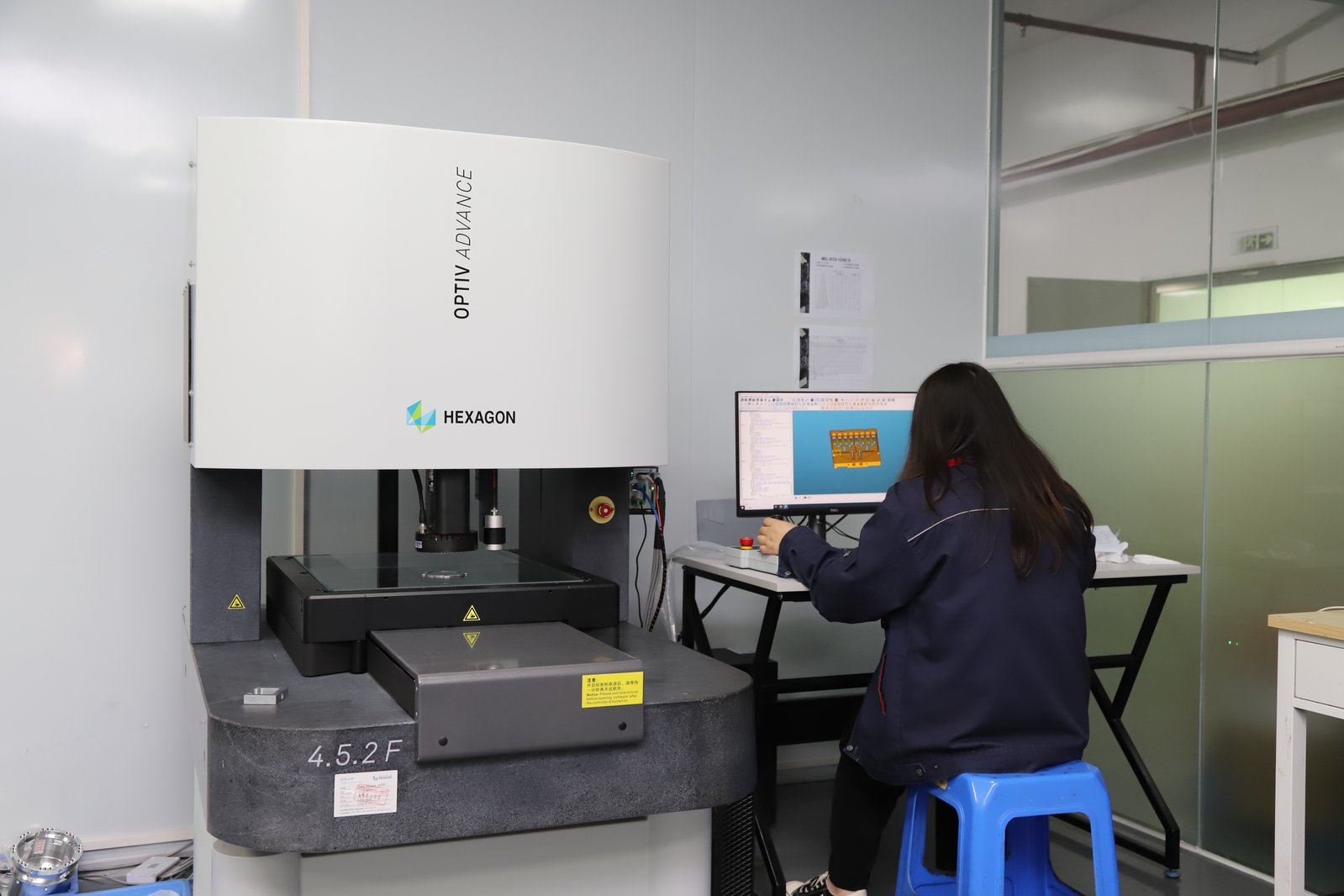
The inspection of a precision part is a real cost center, and it belongs in the quote rather than beneath it. Ask what the quoted price assumes about inspection: which features are measured on the CMM, which by gauges, how often during a run, and what instrument verifies the tightest callouts. A precision quote that prices the cutting time but not the metrology has priced half the process, because a feature at the tight band is not finished when it is cut — it is finished when it is measured, and the measurement has a cost in machine access, in instrument calibration and in the report that proves the result. The supplier that shows the inspection plan inside the quote is a supplier whose precision is real; one that hides it is a supplier whose precision is a claim waiting for a measurement.
The metrology overhead also includes the process-capability evidence that production precision demands. On a repeat order, capability data on key characteristics — collected across a run and reported against the Ppk ≥ 1.67 initial-study target — is not a formality; it is the ongoing proof that the process holds, and collecting it costs run time and analysis. Ask whether the price assumes capability reporting on repeat orders and what the data package will contain. A quote that includes the capability work is a quote for a controlled process; one that does not is a quote for a hope that the first article's luck repeats itself five hundred times.
Which features should carry the precision premium, and which should not?
The precision premium is best spent where the part functions: the bore that locates the bearing, the face that seals, the datum structure the assembly builds on, the feature whose tolerance the product specification actually demands. On those features, the premium buys the certainty the design needs. On the rest — the cosmetic profiles, the free surfaces, the dimensions that nothing mates to — the premium buys nothing but a tighter number on a report. The buyer who walks the drawing feature by feature, asking which dimensions would break the design if they drifted, is the buyer who allocates the premium to the features that deserve it. The supplier that helps with that walk is the supplier whose process advice is worth the premium it charges.
The material choice interacts with the allocation. A precision feature in aluminum is cheaper to hold than the same feature in stainless or a hardened alloy, because the cutting behavior and the tooling cost differ. Ask how the material affects the cost of holding your critical features, and whether the drawing's material could be relaxed where the function allows without weakening the part. The precision premium and the material choice are two levers that move together, and the buyer who pulls them together — precision where the part earns it, material that the function justifies — is the buyer who pays for precision rather than for habit.
How should a buyer read the machine-hour story behind a precision quote?
Underneath the tolerance and the metrology, a precision quote is a statement about hours: the hours on the machine that cuts the features, the hours on the measuring machine that proves them, and the hours of engineering that planned the process. Ask the supplier to show the hour structure — the cutting estimate, the inspection estimate and the engineering allowance — and compare it with your own sense of the part. A quote whose hour structure is transparent is a quote you can test against reality at the first article; a quote that is a single number is a black box that only opens when the invoice arrives. The hour story is the part of the precision premium you can verify, and the supplier that opens its hours is the supplier whose premium you can audit.
Ask how the machine that will run the part is chosen and what its capability costs. A precision feature may need a machine with better repeatability, a grinding step after milling or turning, or a temperature-controlled environment — each a different cost tier. The supplier that names the machine class and the process steps behind the price has shown you where the hours are spent; one that prices the part without naming the process has not. The machine-hour story is the skeleton of the precision quote, and reading it is the difference between comparing precision prices and comparing precision hopes.
What belongs in the quote beyond machining: freight, duties and the 2026 trade picture?
The price of precision machining in China, delivered to your door, includes the freight, the insurance and the duties your destination applies, and in 2026 the trade picture has been changeable enough that the landed-cost side deserves its own line in the reading. Ask for the Incoterm on the quote and what it includes, and confirm the current duty rate for your commodity code rather than assuming last year's figure. A unit price quoted at origin and a cost-to-shelf that adds freight, duties and clearance are two different numbers, and the buyer who compares quotes on cost-to-shelf is comparing what it will actually pay. The precision premium is spent at the machine; the landed cost is spent at your door, and both belong in the comparison.
Ask how the quote treats the documentation that crosses the border with a precision part: the dimensional report, the material certificate and the certificate of conformance that prove the part is what the drawing demands. On a precision order the documentation is not an extra; it is part of the certainty the premium bought, and it should be priced into the quote rather than discovered after shipment. A quote whose documentation package is named is a quote whose certainty has a home; one that ships parts and documentation separately is a quote whose proof will arrive late or not at all.
How do you compare precision quotes without comparing apples to process oranges?
Compare precision quotes on the process structure, not the total. For each supplier, record the tolerance per critical feature and the instrument that verifies it, the machine class and the process steps behind the price, the inspection plan and its frequency, the capability evidence included, the material certificate and the documentation package, and the Incoterm with the landed-cost picture. Then compare the engineering questions each supplier asked — the supplier that questioned your tolerance allocation or flagged the feature that would fight the process has read your drawing, and its quote is priced on understanding. The supplier that returned a number without questions has priced an assumption, and the assumption will surface at the first article.
The honest comparison ends with a controlled first order rather than with the cheapest number. Send the same drawing to a short list with the questions above, read the answers for process substance, and place a small first order with the supplier whose process story is strongest, not necessarily the cheapest, because on precision work the cheapest quote is often the one that has not priced the certainty. Measure the first article against the quoted process: the tolerance held, the instrument named, the report real. On precision machining the quote is a proposal and the first lot is the evidence, and the buyer who reads the precision premium correctly is the buyer whose first lot confirms the reading.
Which red flags should send a precision quote back for rework?
Send the quote back when the tolerance band is applied blanket without allocation, because unallocated tight tolerances mean unpriced risk. Send it back when the metrology is invisible — no inspection plan, no named instruments, no capability evidence — because a precision quote without measurement is a contradiction in terms. Question the single-number quote that cannot show its hour structure, the delivery promise with no Incoterm or landed-cost picture, and the price that undercuts the field without an explanation of how the certainty is produced more cheaply. And treat a quote that cannot say which features drive its tight-band cost as a quote that has not read the drawing, which is the one failure no price can compensate for.
Weigh the pilot as the calibration of the whole reading. A small precision order with a genuine tight feature, a metrology plan and a first-article report will show you whether the premium you paid bought certainty: the tolerance held, the instrument credible, the capability evidence real. If the pilot confirms the reading, the production premium is paying for a process that has already proven itself. If the first lot drifts or the report smooths over the drift, the premium was a surcharge rather than a process, and the next quote — from any supplier — will be read with the structure this reading taught you to demand.
Frequently Asked Questions
Why does precision machining cost more than ordinary machining?
Because precision prices certainty, not just cutting: controlled hours, metrology, process capability evidence and the cost of being wrong on a schedule. The premium is the price of the process's reliability, and it belongs in the quote rather than beneath it.
How does tolerance allocation move the price?
Nonlinearly. Each feature pulled to the ±0.003 mm band adds process control and inspection cost, so tightening every feature prices risk on features the assembly never checks. Allocate the tight band to the features that function.
What tolerance and Cpk should a China precision shop hold?
±0.003 mm on milled and turned features and ±0.002 mm on precision ground surfaces, with Ppk ≥ 1.67 at the initial study on key characteristics from real production data. Capability evidence is part of what the premium buys on repeat orders.
Why should the inspection plan appear inside the quote?
Because a tight feature is finished when it is measured, and the measurement has a cost. A quote that shows the CMM and gauge plan has priced the metrology; one that hides it has priced half the process.
What should I compare between precision quotes?
The tolerance per critical feature with its instrument, the machine class and process steps, the inspection plan, the capability evidence, the documentation package and the Incoterm with landed cost. Compare process structure, not totals.
How does 2026 affect the landed cost of precision machining?
The cost structure at the machine is unchanged, but duties and trade measures on Chinese goods have been subject to change. Compare on cost-to-shelf using the current duty rate for your commodity code rather than last year's assumption.
How do I test a precision supplier's premium cheaply?
With a small order carrying a genuine tight feature and a first-article report. If the tolerance holds, the instrument is credible and the capability evidence is real, the premium bought certainty; if not, it was a surcharge.
Want a precision quote you can read before you pay?
Ask for the tolerance allocation, the inspection plan and the hour structure through [email protected] or +86 13126536955. See the quality page for the inspection framework and the factory page for the machines the premium is spent on.