
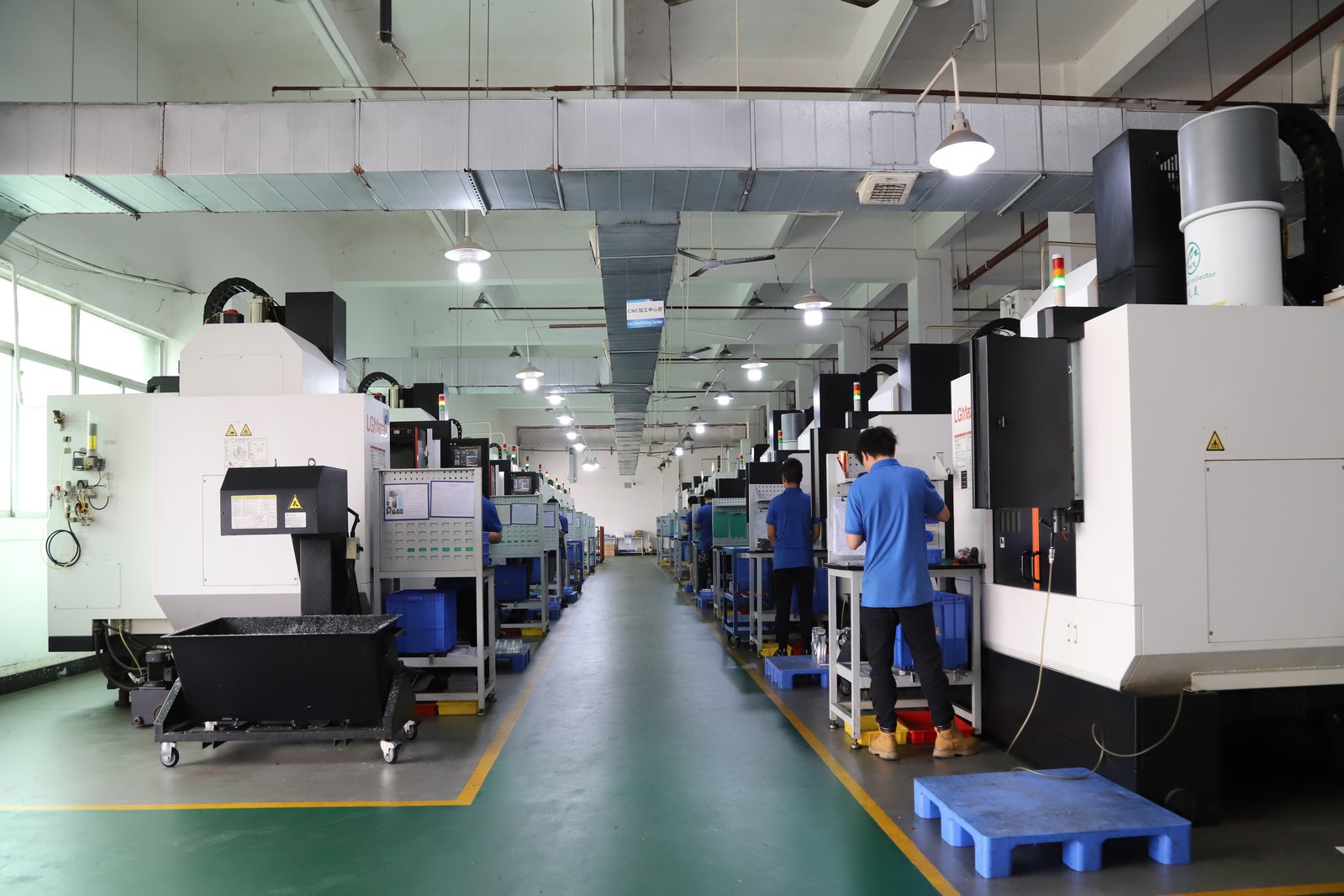
Sourcing precision machining from China is not hard because the machining is hard; it is hard because the supplier sits several time zones away and the parts arrive only after the money has moved. The buyers who get burned are rarely the ones who picked the cheapest quote. They are the ones who paid for promises instead of evidence. Everything in this guide reduces to one habit: make the payment milestones match verifiable events. Before the first deposit, confirm the entity you are paying is the factory behind the quote. Before the balance, hold a first article that matches the drawing. Before the final payment, run a pre-shipment inspection. When the payments line up with evidence, the supplier's incentives line up with yours.
- Who you pay: verify the legal entity matches the factory, not a trading desk between you and the shop.
- Tolerance claim: ±0.003 mm on milled and turned features, ±0.002 mm on precision-ground surfaces, capability at Ppk ≥ 1.67 initial — confirmed by a sample report, not a website.
- Quality system: ISO 9001:2015, IATF 16949:2016 (product design excluded) and ISO 14001:2015 should appear in writing with their scope.
- Payment shape: deposit, then first-article approval, then pre-shipment inspection — each gate releasing only the next tranche.
Why does verification belong before the first payment, not after the parts?
Precision machining is bought sight-unseen, which inverts the normal order of trust. In a domestic purchase you can visit the shop, hold a sample, and pay when the goods are in your hands. When you source from China, the supplier asks for money before the parts exist, and the correction for that is not a longer warranty — it is a sequence of checks placed before each payment.
The checks cost little and the mistakes cost a lot. A drawing review, a certificate sample, a video walkdown, and a small first article together cost a fraction of one rejected production lot, and they separate the supplier who runs a controlled shop from the one running a quoting operation. The same discipline protects you on every future order: once you know a supplier's real process capability, its real quality system, and its real reporting format, the next RFQ is faster and safer.
Think of the payment schedule as the steering wheel rather than the bill. A deposit pays for engineering review and material. The first-article payment buys the proof that the process holds your tolerance. The balance pays for a lot that passed inspection. If the supplier resists that sequence — if every payment is demanded up front with little in between — that resistance is information about how the relationship will feel when something goes wrong.
What should you verify about the entity before a deposit moves?
The first check is not about machining at all; it is about money. The entity on your quotation, invoice, and contract should be the same entity that owns the factory floor and the inspection equipment. Ask for the business name and match it against the company registration, then ask which plant address is on that registration. A supplier that is a genuine shop can answer without hesitation; one that forwards orders to another factory will hesitate somewhere in the chain.
Run a live video walkdown before any meaningful deposit. Ask to see the machine hall, the CMM room, and the material store in one continuous call, because a live tour is hard to fake. Note whether the name above the door matches the name on the quote. A broker can rent a factory tour only once; a real supplier takes you through its own machines and its own inspection bench without staging.
Then verify the people. The person negotiating your order should be able to answer technical questions about your drawing — datum structure, material condition, tooling approach — or should put you in front of the engineer who can, within a day. A sales desk that routes every technical question somewhere else is a sign the engineering depth behind the quote is thin. For a China precision machining order, the engineer who reviews your drawing before you pay is the one who protects your part after you pay.
Which drawing and tolerance claims deserve a written check?
A quote that cannot name the tolerance band and the material is not a quote; it is a guess with a price. Before you compare quotes, the drawing should be complete enough to price: material grade and condition, finish callouts, quantity, and the tolerances that matter. A serious China precision machining supplier holds ±0.003 mm on milled and turned features and ±0.002 mm on precision-ground surfaces, with process capability at Ppk ≥ 1.67 at the initial study on key characteristics and Cpk ≥ 1.33 on general characteristics. Capability is reported per characteristic: every report names the feature, its tolerance band, the sample size, the sigma method, and the study window., and should be willing to say which features drive cost and which drive risk.
Ask the supplier to return a technical review of the drawing, not just a number. The review should name the datum reference frame, flag the features that are difficult to hold at your quantity, and ask questions about anything ambiguous. That response is your first evidence of engineering depth, and it costs nothing but the time to write it. Compare the technical reviews alongside the prices; the cheapest quote with a one-line confirmation is not cheaper once rework is priced in.
Put the tolerance claim in writing in the PO. State the drawing revision, the material certificate requirement, the inspection report format, and the acceptance criteria — typically measurement against the drawing datum reference frame with capability reported where you ask for it. When the contract names these, the first article has a standard to meet and a disagreement has a document to settle it. The precision machining parts overview and the cost guide on this site describe the envelope and how quotes change when you push it.
Which quality evidence holds up when you actually check it?
Quality claims are easy to print and harder to verify, so verify the ones that matter. The supplier should show a quality system certificate with a readable scope — ISO 9001:2015 as the baseline, with IATF 16949:2016 (product design excluded) and ISO 14001:2015 where the programs demand them — and the certificate should name the plant address you are paying. A certificate for a different entity is decoration, not proof.
Then ask for samples of the supplier's real reporting: a first-article report from a recent job, a material certificate, and a CMM report with the instrument identified. Judge them like an auditor. Are the values actual measurements with dates and instrument IDs, or a printed block of numbers? Do the datum references match the drawing's, and can the report be tied to a specific lot and heat number? A supplier that produces these documents as routine output will send samples without hesitation.
Ask about the inspection instruments and their calibration. A shop claiming ±0.003 mm should be able to name the CMM it measures with and its calibration cycle. The quality page on this site lists the CMM, surface, and vision instruments behind our reports and how data links to each lot, that level of concreteness is the standard to hold any candidate to. If the supplier's answer about calibration is vague, its measurement is vague, and its tolerance claim is unverified.
What should the first article prove before the balance is released?
The first article is the strongest single gate in the whole process, and it should be agreed before the deposit. Define what the supplier must deliver: a dimensional report measuring every feature against the drawing datum reference frame, the material certificate with the heat number for the stock used, and any surface finish readings the drawing calls out. Then hold the balance until that package arrives and you have reviewed it.
Review the first article as evidence, not as paperwork. Check the measured values against the drawing rather than against the quote, verify the datum references match, and confirm the material certificate names the heat number tied to your lot. If the supplier holds the tolerance it quoted on the first article and documents it honestly — including the deviations — you have learned what matters: the process works and the reporting is trustworthy.
Run the pilot at a quantity you can afford to learn from. A small first lot with the full documentation package costs little compared with discovering a process problem on the third production batch. Once the first article passes, release the production quantity with the same documentation requirements written into the PO, because the supplier that documents one part properly will document a thousand properly, and the one that improvises on the first will improvise on every lot.
How should payment be structured so risk sits on the right side?
The payment structure should put more of the supplier's money at risk than yours at every stage. A workable shape for a China precision machining order: a deposit covering engineering review and material — typically a modest percentage, negotiated down as the relationship builds — then a payment on first-article approval, then the balance against pre-shipment inspection and shipping documents. If a supplier insists the balance is due before you can inspect anything, ask why the evidence cannot precede the money.
Match the payment currency and method to the size of the order. Wire transfers are standard but leave you with limited recourse, which is exactly why the milestones matter more than the method. For larger orders, a letter of credit or a payment against documents can shift risk to the banks; for smaller orders, the milestone structure does the same job without the paperwork. Decide the structure before the deposit, write it into the PO, and resist paying "just this once" against the schedule.
Recognize what a deposit actually buys. A deposit pays for the work already done — drawing review, process planning, material — not for future cooperation. Keep the deposit proportional to that real work, and make the larger payments land after evidence you can hold: an approved first article, a passed inspection, a bill of lading. When the money tracks evidence, a supplier that delivers has nothing to fear from the schedule, and one that does not deliver cannot hide behind it.
What does a pre-shipment inspection add before the final payment?
Pre-shipment inspection is the last gate, and it exists because a first article can pass while a production lot drifts. The supplier should inspect the finished lot against the drawing and hold the reports, and you should verify the lot before it is packed. A live video inspection of the critical characteristics, or a third-party inspection for larger orders, confirms that the parts being shipped match the parts that were approved.
Add the simple checks that catch most real problems: confirm the quantity matches the PO, the material certificates cover the heats actually used, the surface finish on sample parts matches the callouts, and the packaging protects the parts for the freight leg. Ask to see the parts and the reports together on the video call rather than relying on photographs, because a photograph proves a part existed, not that it measured to tolerance.
Agree what happens to non-conforming parts before the inspection, not after. If the inspector finds deviations, the supplier should have a written path — rework, replacement, or a documented deviation approved by you — and the cost should sit where the contract puts it. The pre-shipment check is the point where a problem costs time instead of a full lot, so make it a fixed step in the schedule rather than an option you request when you feel nervous.
Which red flags should stop the payment before it is too late?
Some signs are answerable and some are warnings, and it is worth knowing the difference. A supplier that hesitates on a drawing question is answerable — everyone has an off day. A supplier that cannot show its own factory on a live call, cannot produce a sample first-article report, or cannot state its tolerance band in writing is not hesitating; it is telling you the capability is not there to show.
Treat these as the serious flags: a legal entity that differs from the factory name; a quality certificate without a readable scope or for a different address; a quote with no material, tolerance, or finish callouts; payment terms that put most of the money before any inspection evidence; resistance to a live walkdown or a pre-shipment check; and references that cannot be produced or verified. Any one of these is negotiable with the right explanation; two or more together are a pattern.
Use the flags to rank suppliers rather than to eliminate every candidate. The China precision machining market contains real factories with real inspection rooms, and the verification steps in this guide are exactly how you find them. A supplier that answers every check with documents and a walkdown has earned the pilot; one that meets every question with reassurance has not. Run the checks on the shortlist, keep the first orders small, and let evidence — not prices — promote a supplier to your production list.
Frequently Asked Questions
What is the most important thing to verify before paying a China precision machining supplier?
That the entity you are paying can actually produce and inspect the parts at the tolerance quoted. Confirm the factory behind the quote, request a sample first-article report and material certificate format, and keep the first payment small enough that the supplier's first delivery is what qualifies them.
How do I confirm a China machining supplier is a factory and not a broker?
Match the legal entity on your contract to the name on its business license, ask for a live video walkdown of the shop floor and the CMM room, and cross-check that the factory's name appears on the quoted capabilities. A broker can disappear between your payment and the parts; a factory with a machine shop and inspection room behind the quote is harder to fake.
Which quality evidence should I request before paying for precision machining?
A certified quality system in writing, a sample first-article report tied to the drawing datum reference frame, a sample material certificate naming the heat number, and the calibration records of the instruments behind the reports. Documents produced on request are weaker than documents the supplier produces as routine.
What does a safe payment structure look like for a China machining order?
A modest deposit at order placement, the balance split against milestones you can verify — first-article approval, pre-shipment inspection, and shipping documents — rather than a large percentage due before any evidence exists. The more the payment tracks verifiable events, the less you rely on trust.
Why does the incoterm matter when comparing China machining quotes?
Two quotes with the same price can transfer risk and freight cost at very different points. State the incoterm you want in the RFQ so quotes are comparable, and recognize that a low EXW price carries freight, insurance, and risk you may be underestimating.
What is the strongest single gate before a large payment?
A first article that matches the drawing, measured and reported before you release the balance. If the supplier's own inspection cannot hold the quoted tolerance on one part, no payment structure fixes the next hundred.
Which red flags should stop me from paying a China machining supplier?
A legal entity that does not match the factory name, a quality certificate that cannot be shown with scope, a quote with no tolerance or material callout, payment terms demanding most of the money before any inspection evidence, and resistance to a pre-shipment check. Each one is answerable; suppliers who avoid the questions are the risk.
Need a China precision machining supplier that will put the checks in writing?
Send the part file with your tolerance and documentation requirements, and ask for a drawing review and a sample report package before you commit. Contact the China Precision Machining team to start with a pilot order built on the gates above.